April 5, 2026 • Margot Calloway • 9 min reading time • Prices verified June 4, 2026
Bed-in-a-Bag Sets Under $50: What You Actually Get for the Money and What to Expect
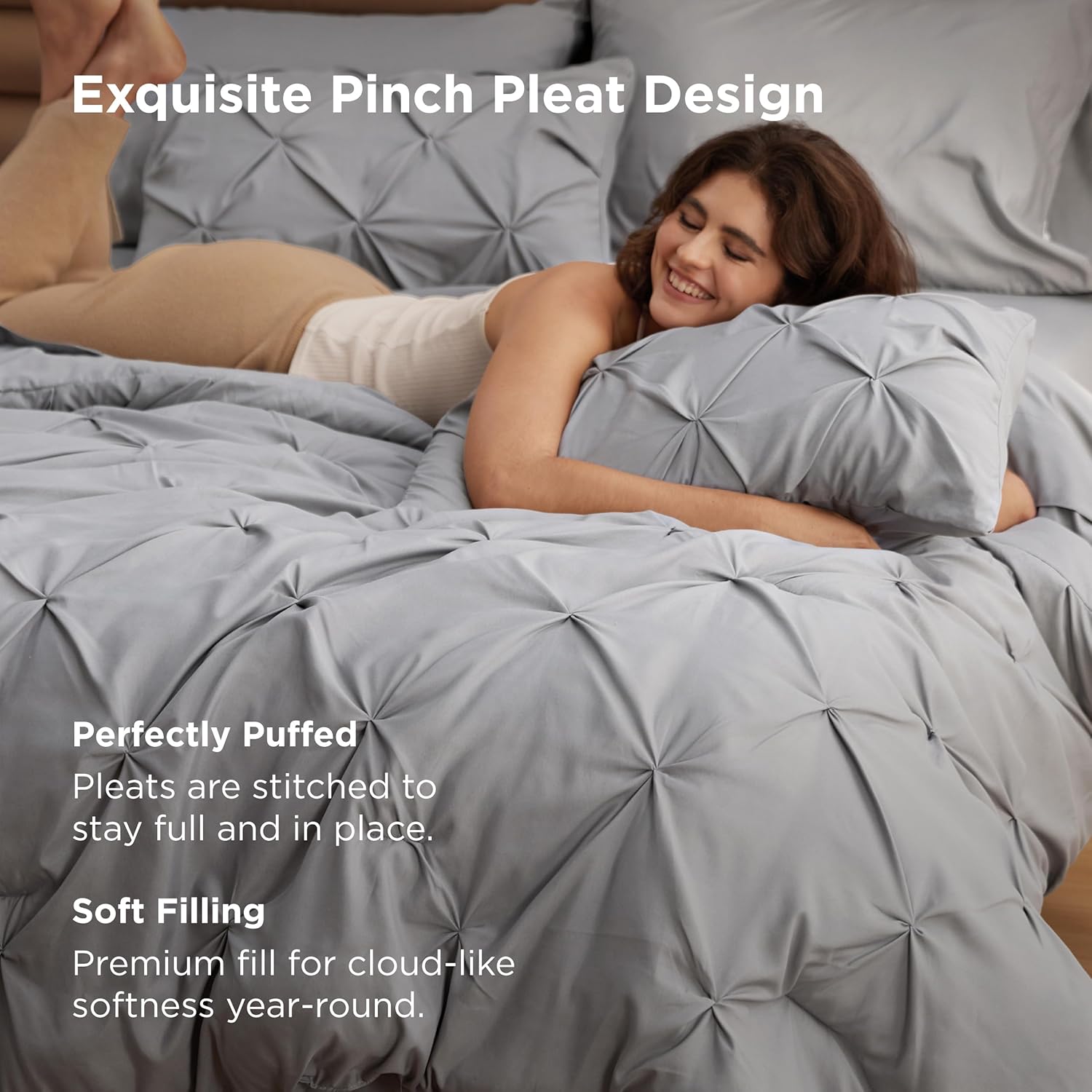
A bed-in-a-bag is exactly what it sounds like: a single package that arrives with a comforter (the big, fluffy outer layer that sits on top of your bed) plus a matched set of pillow shams (decorative covers that go over your pillows), a flat sheet, a fitted sheet, and sometimes a bed skirt. The whole point is convenience — you open one box and your bed looks put-together without having to mix and match separate pieces. At under $50, these sets dominate Amazon’s bestseller lists, the aisles of big-box stores, and the first apartments of roughly everyone who has ever moved out on their own. If you’re here, you either just bought one, are about to, or you’re helping someone else decide. This guide will tell you exactly what you’re getting, where these sets hold up, and — just as importantly — where they don’t, so you can buy with clear eyes.
What’s Actually Inside a Sub-$50 Set
Let’s talk materials first, because this is where the price reality shows up most plainly.
At this price point, virtually every comforter fill is polyester fiberfill — synthetic clusters or sheets of polyester batting sewn inside a shell (the outer fabric casing). You will not find down or down-alternative clusters of any meaningful quality here. The shell fabric is typically a microfiber polyester, rated somewhere around 55–90 GSM (grams per square meter of fabric weight), sometimes marketed with thread-count language that implies cotton but is still polyester weave. A handful of sets advertise “brushed microfiber sheets,” which is an accurate description — it’s a soft-to-the-touch polyester that mimics the hand-feel of percale cotton but breathes less and pills faster.
Good Housekeeping’s comforter buying guide notes that fill power — a measure of how much loft (fluffiness) one ounce of fill creates — is a meaningful spec only for down and down-alternative products. For polyester fiberfill, the equivalent benchmark is fill weight (total ounces of stuffing in the comforter). Most sub-$50 comforters don’t publish this number. When they do, it typically falls between 30 and 60 ounces for a queen. That’s a usable warmth range for a climate-controlled bedroom in the 65–72°F range, but it offers little guidance for cold sleepers or genuinely cold rooms.
The construction method is almost universally sewn-through (also called “stitched through”) — meaning the top and bottom of the shell are sewn together in a grid pattern, which holds the fill in place but creates cold spots along the seam lines where fill is compressed. Baffle-box construction, which uses fabric walls between the top and bottom shell to let fill expand freely, is a mid-market and premium feature and won’t appear here.
By the numbers — what the sub-$50 tier typically delivers:
| Spec | Typical range at this tier |
|---|---|
| Fill material | Polyester fiberfill |
| Shell fabric | Microfiber polyester, ~55–90 GSM |
| Construction | Sewn-through |
| Pieces included | 5–7 (comforter, 2 shams, flat + fitted sheets, sometimes bed skirt + pillowcases) |
| Wash durability (owner-reported) | 10–30 wash cycles before visible degradation |
Where These Sets Genuinely Deliver
Here’s the honest case for buying one — and it’s a real case, not a consolation prize.
Piece count and visual coordination are real value. For someone furnishing a first apartment, a guest room, or a vacation rental on a tight budget, the visual payoff of a coordinated 6-piece set is immediate. The Spruce’s roundup of budget bed-in-a-bag options consistently highlights that buyers rate the “complete look out of the box” as the primary satisfaction driver, not the material quality. If your goal is a bed that looks finished in a listing photo or passes muster for visiting family, a sub-$50 set accomplishes exactly that.
Guest rooms and transitional use cases are a strong fit. A guest room that gets used 10–15 nights a year doesn’t need a $400 comforter set. Owners across aggregated reviews report that these sets hold up well under light, infrequent use — the visual degradation and pilling that shows up under weekly laundering is far less pronounced when a set is washed four to six times a year. For Airbnb operators running a low-volume secondary listing or a B&B room that gets seasonal use, this tier makes operational sense.
Warmth-to-weight for mild climates is often adequate. Sleep Foundation’s overview of comforter selection notes that most sleepers in climate-controlled environments (65–70°F bedroom temperatures) do fine with a moderate-fill synthetic comforter. If you’re not a cold sleeper, not sleeping in a drafty room, and you run heat in winter, a sub-$50 fill weight will cover you — literally.
Kids’ rooms and college dorms are the sweet spot. Real Simple’s bedding roundups repeatedly surface the same pattern: reviewers who rate budget bed-in-a-bag sets most favorably are parents buying for children’s rooms and college students buying for dorms. The reasoning tracks — high wash frequency, short use horizon (one academic year, a few childhood years), and a likelihood of staining or damage make the cost-of-replacement math work in favor of buying cheap and replacing rather than investing in something built to last.
Where to Set Realistic Expectations
This is the part of the guide that saves you a bad review of something that was never designed to do what you wanted from it.
Longevity under regular laundering is the biggest limitation. Owners consistently report that the fitted sheets in most sub-$50 sets show elastic degradation (the band that holds the sheet to the mattress loosens and the sheet pops off overnight) within 15–25 wash cycles. The comforter fill tends to clump or flatten unevenly after 10–20 washes as the polyester fiberfill shifts inside the sewn-through channels. This isn’t a defect — it’s the expected lifespan of the construction. If you wash your bedding weekly, that’s roughly 6–12 months before visible decline. Good Housekeeping’s comforter guide flags this as the defining tradeoff of the synthetic fiberfill + sewn-through category at all price points, not just the budget tier.
Breathability is the other honest gap. Microfiber polyester traps body heat more than cotton or linen. Reviewers who run warm, share a bed, or live in warm climates consistently flag night sweats as the primary complaint across budget synthetic sets. This is a physics problem, not a brand problem — the material is less permeable than natural fibers. If you’re a warm sleeper, a budget synthetic set is likely going to frustrate you regardless of brand.
Thread count marketing at this tier is largely noise. You’ll see claims like “1800 thread count microfiber” on sub-$50 sets. Real Simple’s bedding reporting notes that thread-count figures applied to microfiber fabrics use counting methods that don’t correspond to the traditional cotton thread-count scale — a “1800 thread count microfiber” sheet is not comparable to an 800 thread count Egyptian cotton sheet in feel, breathability, or durability. Read those numbers as marketing framing, not a specification you can cross-compare to mid-market cotton sets.
Sizing can run inconsistent. Across aggregated reviews of the Beckham Hotel Collection and similar budget staples, the most common complaint after breathability is sizing — fitted sheets that are cut shallow for deep mattresses, comforters that are nominally “queen” but measure shorter than a standard queen. This matters if you have a mattress topper or a newer mattress with a profile above 12 inches. Real Simple’s buyer guidance recommends measuring your mattress depth before purchasing any budget fitted sheet.
The Brands Worth Knowing at This Tier
A few names dominate this space and are worth calling out by name because their consistency is real, even if their ceiling is low.
Beckham Hotel Collection is the most reviewed bed-in-a-bag set on Amazon by a significant margin. Reviewers consistently rate it highly for the softness of its microfiber on first use, its color selection, and its visual presentation. The consistent criticism is longevity — the same reviewers who give it 5 stars at purchase often note in follow-up reviews that it declined noticeably after 6–12 months of regular use. It is a reliable representative of what the tier delivers: good initial experience, limited durability runway.
AmazonBasics (now Amazon Basics) is the utilitarian entry. Less style-forward than Beckham, more consistent on sizing (reviewers note the fitted sheets run slightly deeper), and comparable on feel and durability. If you’re buying for function over aesthetics — a guest room, a bunk bed, a backup set — it’s a dependable choice in the category.
Mainstays (Walmart’s house brand) fills a similar role in-store — widely available, well-reviewed for value, and positioned for the same use case. Apartment Therapy’s budget bedding coverage has noted Mainstays as a consistently solid in-person option when you need same-day availability.
The Decision Rule: If X, Then Y
After reading every spec sheet and synthesizing the review patterns across this tier, here is the clearest decision framework we can offer:
If you’re buying for a guest room, a child’s room, a college dorm, or a vacation rental that sees infrequent use → buy a sub-$50 set without guilt. The value is real, the use case fits the product’s strengths, and when it’s time to replace it, you’re not mourning a significant investment.
If you’re a warm sleeper or share your bed → skip this tier entirely, even if the price is tempting. The breathability gap will erode your sleep quality faster than the bedding degrades, and that’s a worse outcome than spending $150–$250 on a mid-market set with a cotton shell.
If you’re in a first apartment and buying this as a bridge → that’s a completely legitimate strategy. Buy it, use it, and when the fitted sheets start slipping off the mattress, treat that as your natural graduation signal to step up into the $150–$300 mid-market tier (Casper, Parachute, Brooklinen) where construction quality, breathability, and longevity are meaningfully different. The cost-per-night math on a $250 set that lasts four years versus two $50 sets over the same period is roughly comparable — but the $250 set sleeps better the whole time.
If you’re managing multiple properties and need to outfit a low-priority room fast → the sub-$50 tier is a reasonable stopgap, but build in a replacement budget annually. Operators in long-run reviews consistently note that the visual decline (pilling, fading, fitted-sheet failures) shows up quickly under commercial-frequency laundering.
The sub-$50 bed-in-a-bag isn’t a bad product. It’s a product that knows exactly what it is. The mistake isn’t buying one — it’s buying one expecting it to perform like something that costs five times as much. Match the product to the use case, and it will do exactly what it’s supposed to do.