April 12, 2026 • Margot Calloway • 9 min reading time • Prices verified June 4, 2026
Why Your Comforter's Cotton Shell Thread Count Matters More Than You Think
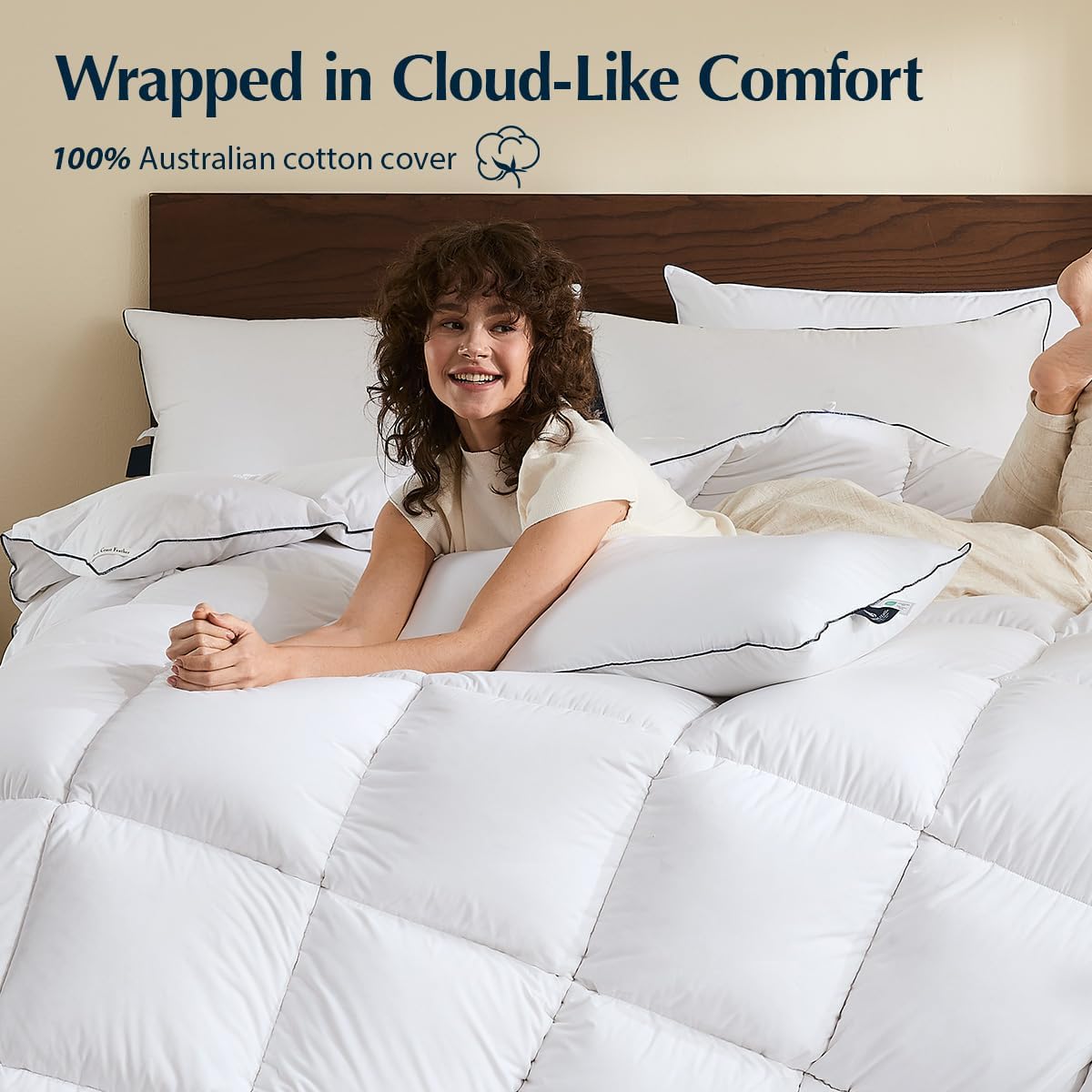
Most people shopping for a down comforter spend all their research time on fill power — the number (like 600 or 800) that describes how fluffy and insulating the down clusters are. That number matters, no question. But there’s a second number printed quietly on every comforter tag that controls almost as much about how the comforter performs, and almost nobody explains it: the shell thread count. The shell is the fabric envelope — almost always cotton — that holds all that expensive down in place. Thread count measures how many individual threads are woven into each square inch of that fabric: more threads generally means a tighter, smoother, more durable weave. Get the shell wrong and the down you paid for starts migrating through the fabric and into your bedroom, the comforter loses its loft within two seasons, and the whole investment underperforms. This guide breaks down exactly what thread count means on a comforter shell specifically, where the real quality thresholds sit, and how to match shell specs to the fill and price tier you’re shopping.
| EDITOR'S PICK[puredown® Goose Down Comforter](https://www.amazon.com/dp/B09P9W76D6?tag=greenflower20-20)… | Mid-tier[Royal Elite-Canadian Down Comfo](https://www.amazon.com/dp/B0BH9DKJ9Z?tag=greenflower20-20)… | Budget pick[600-Thread-Count Egyptian Cotto](https://www.amazon.com/dp/B0GXCSZJ2H?tag=greenflower20-20)… | |
|---|---|---|---|
| Thread count | 700 | — | 600 |
| Fill power | 800 | — | — |
| Fill type | Goose down | White down | Goose down |
| Weight class | Heavyweight | — | 55 oz fill weight |
| Baffle box | — | — | ✓ |
| Certifications | — | RDS, Oeko Tex | — |
| Price | $436.99 | $149.90 | $129.95 |
| See on Amazon → | See on Amazon → | See on Amazon → |
Thread Count on Comforter Shells Is Not the Same as Thread Count on Sheets
This is the most important reframe, and if you’ve been using sheet-shopping logic to evaluate comforter shells, you’ve been working from the wrong map.
On sheets, thread count is a rough proxy for softness and hand feel — and even there, The Spruce’s textile explainer notes that anything above 400–500 is often achieved through multi-ply yarns (twisting multiple thinner threads together and counting each ply separately), which inflates the number without meaningfully improving the fabric. The thread count marketing arms race on sheets has made the number unreliable in that category.
On comforter shells, the stakes are different and more technical. The primary job of the shell fabric is down-proofing: the weave must be tight enough that individual down clusters and, more critically, the fine filaments called “plumules” can’t poke through or escape. Plumules are the tiny feather-fiber strands too small to be screened out in processing — they’re what causes the familiar prickle sensation and the little white fibers you sometimes find on the outside of a comforter after a few months of use. A shell that doesn’t contain them is failing at its core job.
Downlite’s published fabric guidance describes down-proof fabric as requiring a specific thread count range combined with a finishing process called calendering — a heat-and-pressure treatment that compresses the weave and closes microscopic gaps between threads. Thread count gets you close; calendering closes the last mile. This is why two shells with the same thread count number can perform very differently depending on whether the fabric was calendered.
Real Simple’s comforter buying overview makes the same practical point: a 230-thread-count calendered shell will outperform a 400-thread-count uncalendered shell on down containment. The number alone doesn’t tell the whole story — but it still correlates strongly with quality across most of the market, because premium brands tend to both raise thread count and calender their fabric, while budget brands do neither.
The Practical Thread Count Tiers — and What You’re Actually Getting
Here’s how the market actually breaks down across price tiers, based on published specifications from brands and the pattern that emerges across aggregated reviews on Good Housekeeping, Wirecutter, and Sleep Foundation:
By the numbers — shell thread count by tier:
| Thread Count Range | Typical Price Tier | Down Containment | Expected Durability |
|---|---|---|---|
| Under 230 TC | Budget ($60–$150) | Marginal; plumule leakage likely | 2–4 seasons |
| 230–300 TC | Mid-market ($150–$400) | Solid if calendered | 5–8 seasons |
| 300–400 TC | Upper-mid / Premium ($300–$700) | Excellent | 8–12 seasons |
| 400+ TC (combed/Pima/Egyptian) | Luxury ($600–$1,500+) | Exceptional; often sateen weave | 15+ seasons with care |
Under 230 TC — budget tier, buyer beware: At this range, which covers most entries from Beckham Hotel Collection and the AmazonBasics down-alternative line, the weave is loose enough that down containment is genuinely inconsistent. Sleep Foundation’s down comforter roundup notes that reviewers at this tier frequently report “feather poke-through” within the first year. This isn’t a deal-breaker for a first apartment — but it’s exactly why the cost-per-season math eventually tilts toward spending more.
230–300 TC — the functional sweet spot for most buyers: This is where Brooklinen’s Down Comforter and Casper’s Down Comforter both land. Wirecutter’s comforter testing notes (from their editorial research and reader feedback synthesis) place this range as delivering reliable containment when paired with a percale weave and a quality fill. Percale — a plain one-over-one-under weave — is crisp, breathable, and holds down-proof treatment well. At this range you’re not sacrificing breathability for containment, which matters especially for warm sleepers.
300–400 TC — where construction meets longevity: Parachute’s Hotel Down Comforter and Buffy’s Pro line both publish shell specs in this zone. Good Housekeeping’s bedding editors consistently flag the 300–400 TC range as where comforters start to justify the “investment piece” framing — the shell survives repeated washing without the weave loosening, and the comforter holds its loft and shape for the long haul. At this tier you also start seeing sateen weave (a four-over-one-under weave) as an option — sateen is silkier and heavier-feeling than percale, which some buyers love and others find too warm.
400+ TC — the luxury tier, and the conversation changes entirely: Sferra’s Belfino and Matouk’s Montreux both publish shells in the 400–500 TC range using long-staple cotton — either Egyptian, Pima, or in Sferra’s case their proprietary Giza 45 Egyptian cotton. At this count, the per-thread diameter is finer, the resulting fabric is denser without feeling heavy, and the hand feel is genuinely different — a smoothness that reviewers across Apartment Therapy and luxury bedding forums describe as noticeably silkier than mid-market options. The down containment is also, effectively, complete: you’re not buying shell quality for containment at this point so much as for the tactile experience and the multi-decade lifespan.
The Variables That Thread Count Doesn’t Tell You
You know enough now to not be fooled by thread count alone. Here are the three variables that the number doesn’t capture — and that you need to evaluate alongside it:
1. Weave type: percale vs. sateen
Percale and sateen are the two dominant weave structures in the comforter market. Percale breathes better — the plain weave structure allows more air exchange, which is why it dominates the mid-market for all-season comforters. Sateen’s denser structure traps heat more effectively, which makes it a better pairing for heavyweight winter fills but can make warm sleepers uncomfortable. Real Simple’s comforter explainer puts it plainly: if you run hot, percale at 300 TC will serve you better than sateen at 400 TC.
2. Fiber origin: standard cotton vs. long-staple
Standard cotton yarns are shorter-staple, which means more fiber ends per square inch — that’s what creates the pilling and the gradual roughening of feel after washing. Long-staple cotton (Egyptian, Pima, Supima) has longer individual fibers, fewer exposed ends, and retains its smoothness through repeated laundry cycles. The brands playing at the luxury tier — Sferra, Frette, Matouk — are explicit in their marketing about fiber origin and staple length for exactly this reason. At the mid-market, Cozy Earth publishes bamboo-blend shells rather than cotton, which trades cotton’s crispness for a silkier, moisture-wicking feel — a meaningful tradeoff worth flagging if you’re comparing across brands.
3. Shell finish: calendered or not
As noted above, calendering is the mechanical finishing step that compresses the weave and closes microscopic gaps. Downlite’s published guidance identifies calendering as a standard process among down suppliers producing comforters for the hotel and premium home market. Budget brands often skip it to reduce manufacturing cost. You won’t always find this disclosed on retail product pages — but you can use it as a diagnostic: if a comforter at 230–280 TC has no plumule leakage reported across hundreds of reviews, the shell was almost certainly calendered. If reviewers report feather poke-through on a 260 TC comforter, the finishing step was skipped.
How to Apply This When You’re Making a Decision Now
If you’re comparing two comforters at a similar fill power and price — say, Brooklinen’s All-Season Down versus Parachute’s Hotel Down — the shell specs are one of the two or three variables that actually differentiate them at the same warmth level. Here’s the decision frame:
If you’re a warm sleeper or buying for a warmer climate: Prioritize percale weave and don’t chase thread count above 300 TC. Breathability degrades as thread count rises in sateen weaves, and you’ll sacrifice sleep quality chasing a premium shell number that doesn’t serve you.
If you’re optimizing for longevity (5+ year horizon): The 300–400 TC range in long-staple cotton with a percale or tight sateen weave is where cost-per-season math starts to work in your favor. A $350 comforter that holds its loft and containment for ten seasons costs you $35/year. A $120 comforter that starts losing fill at year three costs you $40/year and the frustration of re-shopping.
If you’re at the luxury tier ($600+) and deciding between premium brands: Thread count at this level is table stakes — both Sferra and Matouk clear 400 TC in long-staple Egyptian cotton. The differentiator becomes the fill (Hungarian cluster size, fill power certification from IDFL) and the baffle-box construction that keeps fill distributed. Shell thread count should be the last thing separating your decision in that conversation, not the first.
If you’re buying for a hospitality or short-term rental context: The 300 TC percale range (Parachute Hotel Collection, Brooklinen Luxe) is the professional standard for a reason — it photographs well, launders reliably at commercial cycle rates without shell degradation, and contains fill through the kind of heavy use a guest rotation demands. Good Housekeeping’s commercial-use editorial notes consistently reinforce this tier as the hospitality sweet spot.
The thread count number on a comforter tag is real information — not just marketing filler. But it’s the beginning of the evaluation, not the end. Read it alongside weave type, fiber origin, and finishing process, and you’ll know more about that comforter’s actual performance ceiling than most buyers who’ve already taken it home.