May 1, 2026 • Margot Calloway • 9 min reading time • Prices verified June 4, 2026
Fill Power 600 to 850+: Which Number Actually Matters for Your Sleep
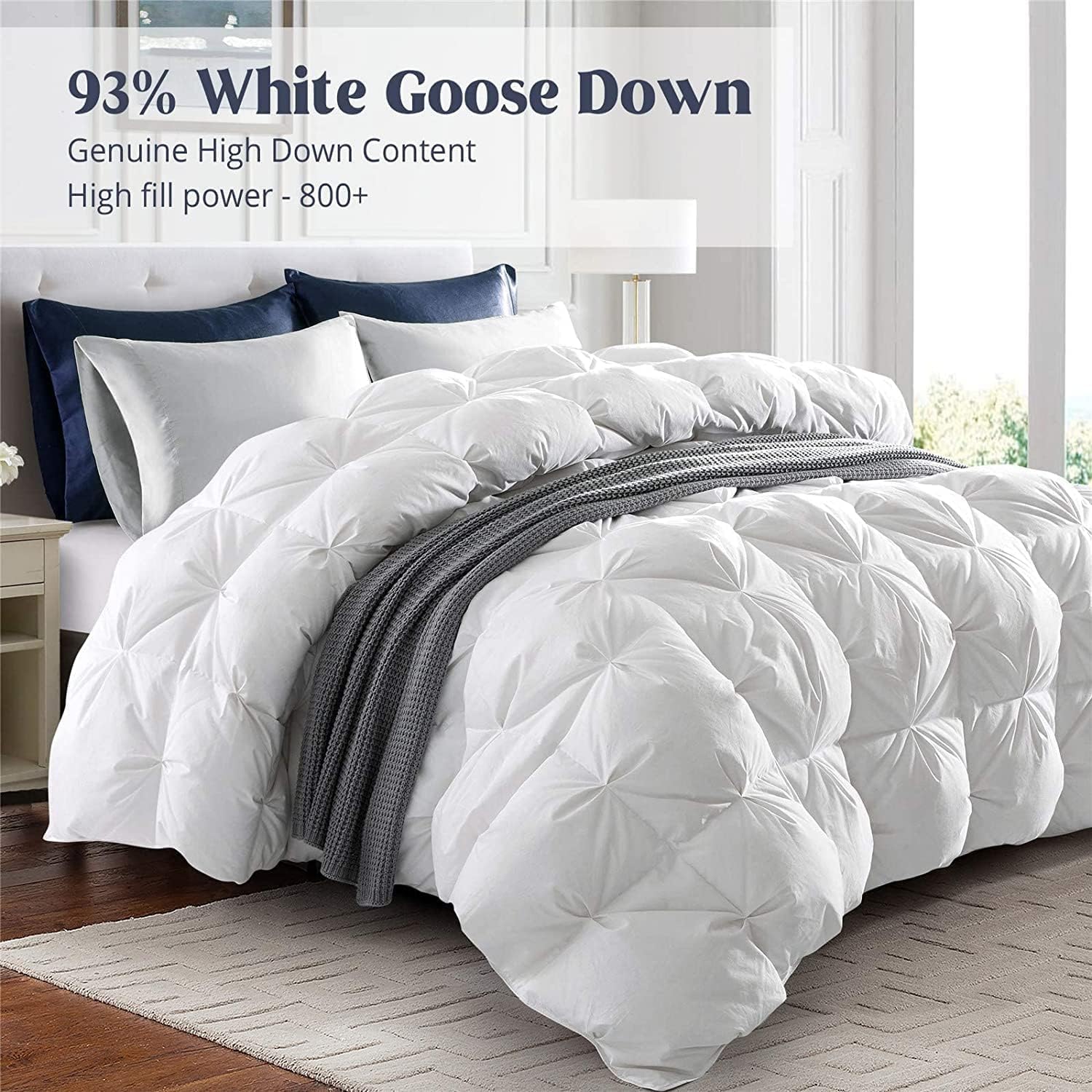
Fill power is the number printed on almost every down comforter box, but most shoppers walk away from it more confused than when they started. Here’s the plain version: fill power measures how much space one ounce of down clusters can occupy, expressed in cubic inches. A comforter rated 800 fill power means one ounce of that down expands to fill 800 cubic inches of space. More expansion means more trapped air, and more trapped air means better insulation for less weight. That’s the whole concept. A high fill-power comforter can be genuinely warm without feeling like a sandbag on your chest — which is why the number matters. But fill power is only half the equation, and chasing 850+ without understanding the rest of the spec sheet is one of the most reliable ways to overspend and still sleep poorly. This guide breaks down what the number actually tells you, where it stops being the deciding factor, and how to match the right fill-power range to your specific sleep situation.
What Fill Power Actually Measures — and What It Doesn’t
The fill-power test is standardized by the International Down and Feather Laboratory (IDFL), which is the independent body that certifies most of the claims you’ll see from brands like Sferra, Matouk, and Parachute. Per IDFL’s technical bulletin on fill-power testing methodology, the test compresses a fixed weight of down under a standardized load and then measures the volume it recovers to. A bigger, more mature cluster — typically from a white goose raised in colder climates — recovers more aggressively and earns a higher rating. Hungarian and Polish white geese, which are among the most cold-adapted breeds and harvested at full maturity, consistently produce the 800–900+ fill-power clusters you’ll find in heirloom-tier products.
What fill power does NOT measure:
- How warm the comforter will be. Warmth is determined by fill weight — the total ounces of down inside the shell — not fill power alone. A 600-fill-power comforter stuffed with 40 ounces of down will sleep warmer than an 800-fill-power comforter stuffed with 14 ounces.
- How the shell feels against your skin. Shell thread count and fabric type (Batiste cotton, percale, sateen) are entirely separate specs.
- How long it will last. Longevity is tied to cluster integrity, stitching construction (baffle-box vs. sewn-through), and shell quality — all orthogonal to fill power.
- Whether the down is ethically sourced. Responsible Down Standard (RDS) certification, tracked by Textile Exchange, is the credential to look for there. Fill power says nothing about sourcing.
The Spruce’s overview of fill power in down comforters makes the same point clearly: a higher number signals loft and light weight, not absolute warmth.
The Fill-Power Tiers — What You’re Actually Buying at Each Level
Here’s a plain-language map of the market as it stands in mid-2026, with honest notes on what each range delivers.
By the numbers:
| Fill Power | Typical Price Tier | Best For |
|---|---|---|
| 550–650 | $60–$200 | Entry-level, heavier sleepers, cooler climates needing dense fill |
| 650–750 | $150–$400 | Mid-market sweet spot — warm, durable, accessible |
| 750–850 | $300–$800 | Lightweight luxury, hot sleepers who want warmth without weight |
| 850+ | $500–$1,500+ | Heirloom-grade; diminishing warmth returns, maximum loft and longevity |
550–650: Entry-Level and Workhorses
This is the Beckham Hotel Collection and AmazonBasics range. At this fill power, clusters are smaller and denser, which means you need more down (higher fill weight) to hit the same warmth level as a 750+ product. That’s not a flaw — it’s just physics. The result is a slightly heavier comforter that still performs well for a season or two of hard use. If you’re outfitting a short-term rental with a $100 budget per bed, 600 fill power with an adequate fill weight is a completely defensible call. Where it costs you: over five years, lower-grade clusters compact faster and the comforter gradually loses its loft. The cost-per-night math stops favoring the budget option around year three.
650–750: The Mid-Market Sweet Spot
Casper, Brooklinen, and Parachute all live here for their core products. The Wirecutter / New York Times “Best Down Comforter” guide has long positioned the 650–700 range as the threshold where most sleepers stop noticing a difference in everyday warmth. For the broad mid-market reader — a homeowner or apartment dweller curating a layered bed — this range hits the intersection of real performance, reasonable longevity (5–8 years with proper care), and a price point that doesn’t require a separate conversation with a financial planner. Shell quality and baffle-box construction tend to be strong at this tier from the brands above, which matters more for long-term satisfaction than squeezing out another 50 fill-power points.
750–850: Lightweight Luxury, the Hot-Sleeper’s Range
This is where the weight-to-warmth ratio becomes genuinely noticeable. Owners of Parachute’s Hotel Collection and Brooklinen’s Luxe Down consistently report the same thing in reviews: it feels like sleeping under almost nothing, but you wake up at the right temperature. That’s the 750–800 fill-power experience — clusters large enough to trap sufficient air with very little fill weight. Good Housekeeping’s tested-and-reviewed roundup of down comforters flags this tier as particularly well-suited to warm sleepers who still want some down insulation rather than switching to an alternative fill entirely. For boutique-hotel operators and Airbnb Superhosts equipping rooms for guests with varying sleep temperatures, this range tends to generate the fewest “too hot / too cold” complaints because you can run a lower fill weight and still deliver real warmth.
850+: Heirloom Territory
Sferra’s Giza 45 collection, Matouk’s Montreux, and comparable products from Frette sit here. The Sleep Foundation’s overview of best down comforters notes that above 800 fill power, the real gain is cluster durability and loft recovery over time — not a step-change in nightly warmth. A well-maintained 850-fill-power comforter from a brand using RDS-certified Hungarian white goose down should hold its loft for 10–15 years with annual professional cleaning. That’s the case for spending $800–$1,500: you’re not buying more warmth, you’re buying a longer depreciation curve and a noticeably airier sleeping experience. If you’re deciding between Sferra’s Giza 45 and Matouk’s Montreux at this tier, the decision comes down to shell construction and duvet-cover compatibility more than a 20-point fill-power difference — both are spec’d beyond the point where the number is the differentiator.
The Variable Fill Power Ignores: Fill Weight
This is the most underrated spec in down bedding, and it’s where a lot of intermediate buyers make a costly mistake by fixating on fill power while ignoring the ounce count on the label.
Fill weight is simply the total weight of down stuffed into the shell. Combined with fill power, it determines actual warmth:
Approximate warmth = fill weight × fill power (relative, not absolute)
A comforter with 800 fill power and 18 oz. of fill will sleep warmer than one with 800 fill power and 10 oz. of fill. The first comforter uses higher fill power to achieve a lighter finished weight while still being warm; the second might be marketed as a “lightweight” or “summer weight” option and is genuinely appropriate for warm climates or hot sleepers who want minimal insulation.
Brands vary widely in how transparently they publish fill weight. Sferra and Matouk include it in their full product specs. Some mid-market DTC brands list it clearly; others bury it or omit it entirely. If a brand doesn’t publish fill weight, that’s a yellow flag — you’re being asked to trust a single number (fill power) that only tells half the story. The Spruce’s fill-power explainer recommends cross-referencing both figures before purchase, and that’s the right call at any price point.
Certifications: The Credential That Actually Travels With the Claim
Fill power is a performance claim. Certifications are the trust layer — and for intermediate buyers, they’re worth understanding precisely because brands use them inconsistently.
RDS (Responsible Down Standard) — Issued by Textile Exchange, this is the most widely recognized third-party certification confirming that down was not sourced from live-plucked or force-fed birds. Per the Responsible Down Standard v3.0 documentation, RDS certification requires traceability through the entire supply chain, from farm to finished product. Parachute, Brooklinen, and most brands in the $200+ tier now carry this.
IDFL certification — The International Down and Feather Laboratory independently verifies fill-power claims and species claims (goose vs. duck, white vs. grey). If a brand says “800 fill power Hungarian white goose down” and has IDFL certification on that lot, the number has been independently verified. Without it, you’re taking the manufacturer’s word.
Downpass — Common on European products and sometimes seen on Sferra’s sourcing documentation. Functionally similar to RDS in its animal-welfare scope, with somewhat broader geographic coverage in central European supply chains.
For ethics-conscious buyers at any tier: RDS + IDFL together is the gold standard. RDS alone covers welfare; IDFL alone covers performance. You want both.
The Decision Rule: If X, Then Y
You’ve read the specs. Here’s how to close the decision.
If you run hot or share a bed with someone who does: Prioritize a higher fill power (750+) with a lower fill weight. You want the loft without the insulation mass. Brooklinen Luxe, Parachute Hotel Collection, and comparable products spec well here.
If you sleep cold or live in a genuinely cold climate: Fill weight matters more than fill power. A 650-fill-power comforter with a robust fill weight will keep you warmer than an 850-fill-power comforter with a minimal fill weight, and it will cost you significantly less.
If you’re furnishing multiple beds for a rental property: The 650–750 range at the $200–$400 per unit price point is where the cost-per-night math holds up over a 3–5 year replacement cycle. Go RDS-certified to protect your brand from sourcing questions in reviews.
If you’re making a decade-plus investment for your own bed: The 800+ tier earns its price through cluster longevity and loft retention, not through delivering dramatically warmer nights in year one. Spend accordingly and budget for professional cleaning.
If a brand won’t publish fill weight alongside fill power: Ask before you buy, or buy from a brand that’s transparent with both numbers. One spec without the other is incomplete information — and at $400+, you’re entitled to the full picture.
Fill power is real, measurable, and worth understanding. It’s just not the whole answer — and now you have the rest of it.